Soldering Play in Board Assembly
When it comes to board assembly, soldering is a crucial step. But what role does it play exactly? Soldering is essentially the glue that holds all of the components together to create the circuit board assemblage (PCBA). Without soldering, the individual parts wouldn’t be able to connect to each other.
The simplest way to think of it is that soldering bonds metals together using heat. This is achieved by melting the metal alloy, known as solder. Typically, it’s a combination of copper, tin, and silver. When heated with a hot soldering iron, the solder melts and forms a solid metallurgical bond.
There are several different kinds of solder, but the most common is tin/lead/brass, which has a low melting point and is easy to work with. Most soldering is done with a hot iron, but some is also performed with a laser or microwave source. The most important thing when doing any kind of soldering is proper cleaning and maintenance of the tools and work area. This is critical because leftover flux residue can negatively impact the performance of a soldered joint. It can also lead to shorts, resulting in the need for a costly redesign and re-fabrication.
When it comes to PCB assembly, a large number of failures are due to problems with the soldering process. One of the most common is overheating, which can be caused by not leaving enough space between components or by incorrect rotation. The other is poor quality solder paste. This can result in bridge shots, which are gaps between solder points that cause weak metallurgical connections. Fortunately, modern high-speed pick and place equipment can avoid both of these issues.
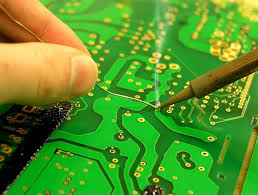
What Role Does Soldering Play in Board Assembly?
Before the reflow soldering process begins, the PCB is placed in a special oven that consists of a preheat zone, soak zone, reflow zone, and cooling zone. The temperature profile for each of these zones can vary and depends on the needs of a specific project.
During the preheat zone, the PCB is slowly brought to a temperature that evaporates any remaining moisture and activates the flux in the solder paste. Then the reflow zone raises the temperature of the solder paste to its melting point, which enables it to form a strong metallurgical bond with the copper pads on the surface mount technology (SMT) components. The final cooling zone cools the solder down to prevent thermal stress and ensures that the joints will be robust and reliable.
The most important thing to remember when doing any kind of soldering is to follow the manufacturer’s guidelines and maintain a clean work area. It’s also important to keep a first aid kit nearby in case of accidents, as both wave and reflow soldering produce harmful fumes. It’s best to keep a clean and obstruction-free work environment to minimize the risk of fire or other hazards. Lastly, make sure there is adequate ventilation because it’s vital to the safety of employees. Altest provides a DFM check to ensure that our clients’ designs will be able to be manufactured on time and without any delays or expensive RMAs.