Materials Are Commonly Used in Manufacturing FPC Circuit Board
FPC stands for flexible printed circuit, it is a form of circuit board that is not rigid and can be bent or twisted. Its flexibility allows it to be positioned and oriented according to the spatial layout of the components or connections, which is not possible with conventional Rigid PCBs. As a result, it can save space and weight. This technology is widely used in various electronic products and fields, including mobile communication, laptop computers, computer peripherals, digital cameras, and many others.
The basic structure of the fpc circuit board is comprised of a base film of polyimide or polyester (Polyester, commonly referred to as PET) that has copper patterns deposited on it and covered by insulating layers, also known as solder resist or cover lay. These layers protect the copper from corrosion, but the areas of the pattern where components are to be mounted or connections made with other boards remain exposed. For this reason, those areas are treated to prevent oxidation.
To make the copper traces on the PI layer, a conductive silver paste is applied using an eco-friendly chemical blend. The paste is then cured and dried, making it a conductive adhesive that acts like the glue attaching devices to the conductors. The thickness of the bond is approximately 1/3 that of a soldered connection, but it is still an effective and economical means of connecting components to the conductors.
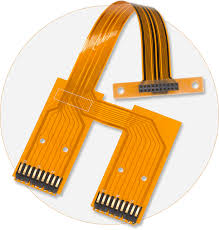
What Materials Are Commonly Used in Manufacturing FPC Circuit Board?
Different materials are used for the FPC substrate, depending on the requirements of the application. PI is the most popular choice, as it is more economical than PET and has better flame resistance. Its high temperature rating also makes it a good candidate for dynamic environments. Other niche polymer materials, such as PTFE and PVDF, are often employed in applications where critical electrical performance is needed, but they are more expensive than PI.
In addition to the conductive adhesive, it is essential to use proper test methods to evaluate the quality of FPC circuits. This includes testing for resistance, insulation and bend life. These tests help ensure that the traces on the board will be able to function properly and safely under the conditions of use.
In addition to the aforementioned materials, insulators such as dielectrics are required in order to provide proper insulation between different layers of the circuit board. Similarly, solder paste and other materials that will enable the creation of a solid connection between the FPC and the components are needed to complete the assembly. Finally, finishing materials such as tin for welding and gold for high voltage connections are often used to increase the reliability of the finished product. Whether an FPC is destined for high-tech consumer electronics or advanced military applications, it must pass the appropriate test in order to provide reliable functionality and durability under real-world conditions. This can only be achieved with a thorough understanding of the materials and manufacturing process. Only then can the full potential of the technology be realized.