Assembly company pcb
An assembly company PCB (Printed Circuit Board) is a specialized firm that provides comprehensive services for the manufacturing and assembly of PCBs, which are essential components in virtually all electronic devices. These companies play a pivotal role in the electronics industry, bridging the gap between design concepts and finished products. The services they offer encompass a wide range of processes, from the procurement of raw materials to the final assembly and testing of the PCB.
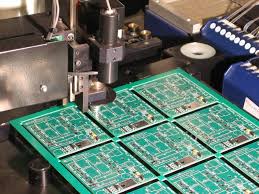
At the core of an assembly company PCB’s operations is the assembly company pcb process. This involves mounting various electronic components onto the PCB. The components can be either surface-mounted (Surface Mount Technology or SMT) or through-hole mounted (Through-Hole Technology or THT), depending on the design requirements and intended application of the board. SMT is a more modern technique, allowing for smaller and more complex designs, while THT provides robust mechanical connections, often used in applications requiring higher durability.
The first step in the assembly process is the procurement of components. Assembly companies source components from reliable suppliers to ensure the quality and consistency of the final product. This step is crucial, as the performance of the assembled PCB heavily depends on the quality of the individual components. Some assembly companies offer component sourcing services, ensuring that all parts meet the necessary specifications and are available in the required quantities.
What is Assembly company pcb?
Once the components are sourced, the assembly process begins with the preparation of the PCB. This involves the application of solder paste to the board, typically using a stencil to ensure precise placement. The solder paste acts as an adhesive to hold the components in place before they are permanently affixed through soldering. For SMT assemblies, components are placed on the board using automated pick-and-place machines, which ensure high precision and speed. For THT assemblies, components are manually inserted into the pre-drilled holes.
After the components are placed, the next step is soldering. For SMT, this is typically done using a reflow oven, which heats the board to melt the solder paste and create strong electrical connections. For THT, wave soldering is often used, where the board passes over a wave of molten solder to connect the leads of the components to the PCB. Both methods require precise temperature control to ensure the integrity of the solder joints.
Post-soldering, the assembled PCB undergoes thorough inspection and testing. This can include visual inspections, automated optical inspections (AOI), and X-ray inspections to check for defects such as poor solder joints or misplaced components. Functional testing is also performed to ensure that the PCB operates as intended. This step is crucial for maintaining high quality standards and ensuring that the final product meets the customer’s requirements.
In addition to assembly, many PCB assembly companies offer design and engineering support. This can include design for manufacturability (DFM) reviews, which help optimize the PCB design for efficient manufacturing, reducing potential issues and costs. These services are especially valuable for startups and small companies that may lack in-house expertise in PCB design and manufacturing.
Overall, assembly company PCBs are integral to the electronics manufacturing ecosystem. They provide the necessary expertise, equipment, and processes to turn electronic designs into functional and reliable products. By handling everything from component sourcing to final testing, these companies enable their clients to focus on innovation and market development, ensuring that the final electronic products meet the highest standards of performance and reliability.